Some conversations leave you clearer, others a little more stupid. Often with the same people.
It was never the people.They were playing different games, so nobody understood anyone, and nobody came out any wiser.
Insightful DiscourseFour-hour workshopYou know the meetings. An hour later you leave tired, less confident, with nothing decided. Next week the same people hold a conversation that leaves everyone clearer. Perhaps five of your last ten discussions were worth having. Thomas sees a hidden factor behind the difference, one your team can manage. This short workshop is about the other five.
- Format
- Short Intense Training Workshop
- Audience
- Executive Teams
- Focus
- Teams & Organisation
A Short Introduction
A short four-hour online workshop. Using real topics, we train ways to conduct the discourse to get and maintain team energy and agency.
Styles and Their Aim
Gaining grip on intelligent exchange
Losing it
If your team members are not mobile and fearless between these styles, they will sooner or later dig a ditch between each other. It requires training.

What It Does to a Team
Depending on the situation, each of these discourse styles is legitimate. Used at random, they stop working productively and waste time, energy and engagement. Each team member needs to be able to switch between them at will.
Where Losing It Leads
The three styles come from the top of Friedrich Glasl’s nine-stage model of conflict escalation, the part where people still behave in a civilised way. Debate, at its root, means to beat down: the argument, or the opponent. It is rough, and still legitimate, because the opponent is standing in front of you. When none of the three works, the next step down is not a fourth style.
- Steamrolling The more powerful person simply ignores the other.
- Defamation When steamrolling meets too much resistance, people start talking behind the other’s back, until nobody listens to them any more.
- Strategic attack Going for the other side’s nerve centre.
- Mutual destruction Glasl’s ninth stage. Surviving no longer matters, as long as the enemy goes down too.
The workshop stays on the top three stages, so your team never needs to visit the other six.
Unafraid of All Three
Most people have a favourite style, and one they quietly avoid.
- Dialogue
- Avoided because it means being open, vulnerable, and really listening.
- Discussion
- Avoided because the details might reveal what someone doesn’t know.
- Debate
- Avoided because it gets brutal. Attacked, some people freeze and say: fine, I give up.
Giving up is not always the right answer. When one person is in dialogue and openly offers their weak points, and the other is in debate and uses them to win, it hurts. So a team needs to be able to play all three, and to agree which one it is playing: are we going for the throat, or are we being open?
One Topic, Three Ways
Knowing the styles is not enough; you need to know how each one feels. What words do you use in it? How do you recognise the frame of mind someone is in right now: do they want to debate, to discuss, or are they ready to move up to dialogue? Once you can see it, you can move up a level, and lift somebody else up with you.
So part of the workshop takes a real, controversial topic and argues it at each level in turn. People do things they have never done before, such as trying to beat down a colleague’s argument on purpose. There is a lot of laughter, sometimes to tears, and that is part of the method: laughter opens minds.
Feature Profile
Six scales describe how Insightful Discourse is set up: why, how and with what results. Each runs between two poles, numbered 5 to 2 towards each pole, with a single 1 at the centre; there is no zero. Filled cells show where the workshop sits; each group carries its own colour.
Why
Aim
Whether the workshop sets out to build a skill or to inspire. The band sits evenly between skill and inspiration.
Area of usefulness
Where what you take away is meant to be used. The band leans towards professional life, with some reach into private life.
How
Where we go into detail
Whose part the workshop looks at closely. The band leans towards your own responsibility, with some reach into other people’s responsibility.
Method
How the workshop works with you: mentoring alongside you, or training. The band sits evenly between mentoring and training.
Results
Learning
Depth of understanding or breadth of knowledge. The band leans towards depth of understanding, with some reach into breadth of knowledge.
Confidence
The kind of confidence the workshop aims for. The band stays with presence.
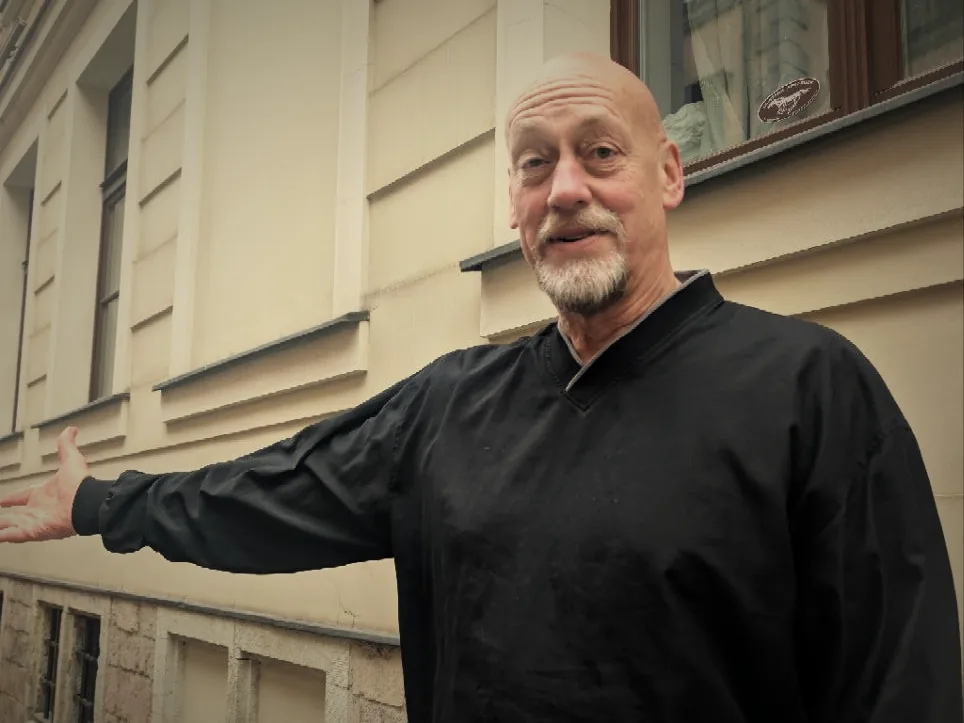
Talk to Thomas about Insightful Discourse
Tell him about the team and what it's stuck on. He'll tell you whether these are the right four hours.