“You always do that.”“That’s not true.”Feedback complete.
Both of you meant well.Next time, both of you will mean well in silence.
You noticed it in March. You kept quiet in April, because last time it ended in a slammed door. By June the whole team works around the problem and wonders why you let it run. When you finally speak, it comes out as a verdict, and the person you meant to help defends themselves. When a whole team can give and take feedback, its collective IQ rises like the sea level, and all the ships go up.
- Format
- Four-Hour Workshop
- Audience
- Managers & Leaders
- Scope
- Giving & Receiving
A Practical Introduction
A four-hour workshop with Thomas Bothe for managers, leaders and their teams who would rather say the thing than walk past it, and say it so it helps.
Why It Lands Badly
Thomas treats feedback as information that comes back to a system: you are on course, or you need to adjust. Under pressure, you start at the bottom of his ladder, with a judgement of who the other person is. A judgement of identity draws a counter-attack. Both of you leave hurt, and both of you learn to keep quiet next time. With each rung you climb, the other person gets something they can act on.

The Feedback Ladder
- Follow upVerifies and acknowledges goal-achieving behaviour→ Performs it
- Goal, behaviour, consequence, wishCommon goal, precise behaviour and consequence, desired behaviour→ Understanding and intent to act
- Behaviour and consequence→ ‘Embarrassed’ understanding
- Describes behaviour“You did…!”→ “I did because…!”
- Generalisation“You always do…!”→ “That’s not true…!”
- Judgement of identity“You are…!”→ “What about you…?!”
Each rung draws its own answer. The higher you climb, the more the other person can use.
Model © Thomas Bothe
Bones, Then Muscle
Like the Pareto principle or the OODA loop, the ladder is a thinkware: a tool for thinking that a whole team can share. Thomas built this one for feedback alone. It holds exactly what you need to give and receive feedback, and leaves out everything else.
- The bones The ladder itself. Precise and workable, and bare on paper.
- The meat Stories, so each rung looks like a conversation you have already had.
- The muscle Exercises, so people can use it in a real conversation, from whichever end they start: giving or receiving.
Nobody walks out a total expert. It is like the first weeks with a driving licence: a little stiff and a little worried. What the team does walk out with is a common language, so anyone can give or take feedback on the spot, in either role. They have also seen it work, which is the best reason to keep practising until they are good, and then brilliant.
Feedback in a Team
Feedback in a team runs three ways: one to one, one to many and many to one. First thing to understand: getting feedback is not a passive thing. It’s not patiently waiting like a wet poodle. It’s not lashing out in defence either. Much of the time it’s converting manure into gold. When only the manager gives feedback he or she goes blind. In this workshop each one climbs two ladders of quality: how to give and how to receive useful feedback. Can’t be good at one and bad at the other.
The Top Rung
Above the ladder sits follow-up. You check that the person now works towards the common goal, and you say so when they do. Skip it, and the next round of feedback starts at the bottom again, with a little less goodwill on both sides.
- Giving: Climbing from verdicts to goals, behaviour and follow-up.
- Receiving: Keeping the useful part of a clumsy delivery.
Where Is Your Team Now?
Imagine a management team that can show each other a different view, agree on the common goal, and then calibrate each other instead of criticising. Nobody lashes back, and nobody goes quiet. They stop bumping into each other and start to play.
On a scale of 1 to 10, where does your team’s feedback stand today?
Two Climbs
Bumping into each other
At 4 or 5, every exchange costs a little goodwill. Getting the team to 7 or 8 is the challenge, and it pays.
Already very good
At 8, professionalism is expected. What comes on top of it is what people notice. At 9 or 10, feedback starts to look almost like an art.
Feature Profile
Six scales describe how Useful Feedback is set up: why, how and with what results. Each runs between two poles, numbered 5 to 2 towards each pole, with a single 1 at the centre; there is no zero. Filled cells show where the workshop sits; each group carries its own colour.
Why
Aim
Whether the workshop sets out to build a skill or to inspire. The band leans towards skill, with some reach into inspiration.
Area of usefulness
Where what you take away is meant to be used. The band leans towards professional life, with some reach into private life.
How
Where we go into detail
Whose part the workshop looks at closely. The band stays with your own responsibility.
Method
How the workshop works with you: mentoring alongside you, or training. The band leans towards mentoring, with some reach into training.
Results
Learning
Depth of understanding or breadth of knowledge. The band leans towards depth of understanding, with some reach into breadth of knowledge.
Confidence
The kind of confidence the workshop aims for. The band stays with presence.
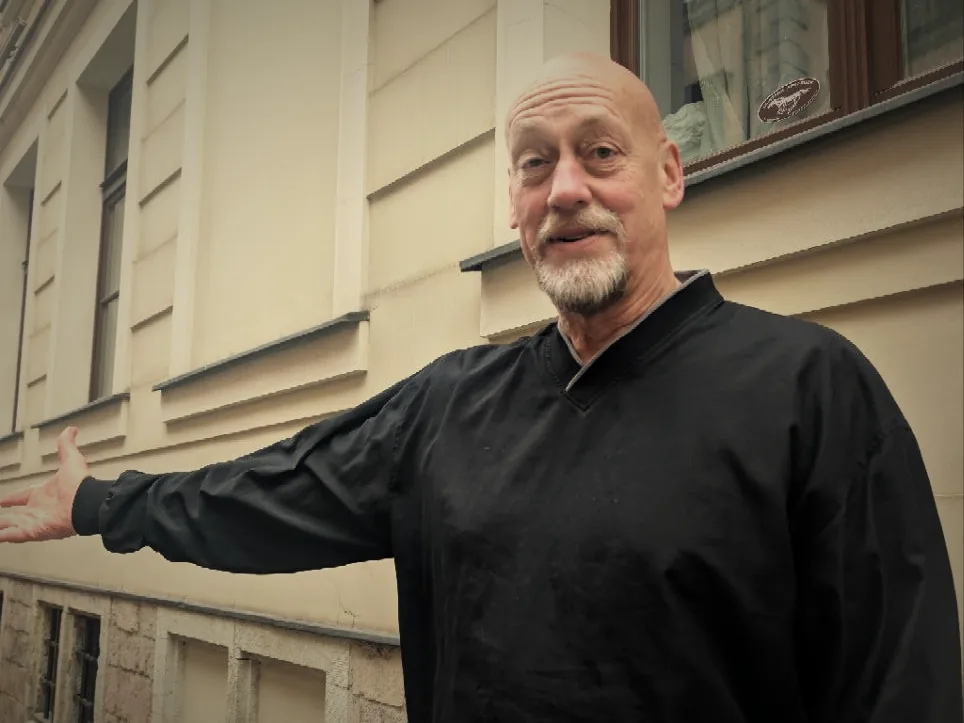
Talk to Thomas about Useful Feedback
Tell him about the team and what it's stuck on. He'll tell you whether these are the right four hours.