The turkey trusted the farmer every morning. Then came Christmas.
Distrust hides in the balance sheet.
Your team feels it long before you do.
People who trust each other close a deal with a handshake. Without trust, they need a couple of hundred pages of contract. Inside a company, distrust shows when leadership has run out of goodwill with its management team, and some of them have internally said goodbye. In Thomas’s words, distrust does not equal investment; it equals waste. This short workshop, built on his book Create Trust in Your Leadership, treats trust as something you can estimate and build.
- Format
- Dialogical Exploration
- Audience
- Managers & Leaders
- Focus
- Top Management Teams
Grounding Trust to Remove Friction
A short four-hour online workshop on trust as a leadership tool: recognising trust opportunities, how trust works with different stakeholders, and practical methods to turn it into business benefit and quality of life.
Trust or Hope?

Trust is the expectation of a favourable outcome; hope is more like a wish. Bertrand Russell’s turkey trusted the farmer who fed it every morning, until Christmas. Thomas looks for trust that holds when tested: granted by informed people who have a choice, and who cooperate rather than submit.
Sand in the Ball Bearings
Trust makes it easy for people to work together: to stay close, to do something in common, to move in step. Distrust moves them apart, because nobody is sure what the other side intends, or what damage it might do. Then everything slows down.
A precise contract is not distrust. Defining together what needs to be done is plain good sense. Distrust starts where people assume stupidity or bad intent.
What distrust adds
- Double-checking
- Side-checking
- Doubting motives
- Reading the fine print twice
- Writing more fine print, just in case
Total Extra work, extra time, and a concrete cost.
What Your Crew Sees
Your trustworthiness lives in other people’s heads: your owners’, your market’s, your crew’s, and your own. The workshop uses Thomas’s TrustEstimator™ to make it visible. A management team scores trust in its leadership component by component, and the gap between how you see yourself and how your crew sees you shows where resistance builds. The bigger the gap, the more costly resistance and wasteful complexity you meet with that group.
The TrustEstimator™
- A Functional competence
- B Future orientation
- C Authenticity
- D Reliability
- E Benevolence
- F Active responsibility
Too Much of a Good Thing
You can overdo each component. Competence tips into overconfidence, reliability into rigidity, benevolence into self-sacrifice. A trust level of 10 is the optimum; 11 is blind trust. In the long run, exaggerations do not make things run more smoothly; they do the opposite.
- Estimate: Where trust stands with each stakeholder, yourself included.
- Build: The lowest-scoring components, where distrust costs most.
Fixes That Cost Nothing
On paper, the TrustEstimator™ is a skeleton. The workshop puts meat on it with stories and exercises, until your team can use it to think. It doesn’t judge you, and it doesn’t recommend anything. It asks the questions; the answers, and what you do about them, stay with you. Thomas facilitates, and you own the discussion.
Ask the questions of your customers, your employees and your investors. Then ask the fourth stakeholder: yourself, in this role. How competent am I? How authentic? How reliable, today and in half a year? Now and then the honest answer is that it would be wiser not to take the job.
More often, the fix is cheap or free, because it means stopping something. Stop preventing people from taking initiative, and you stop paying for the control that held them back. Take out the blocks, and the costs leave with them.
Feature Profile
Six scales describe how Trust in Leadership is set up: why, how and with what results. Each runs between two poles, numbered 5 to 2 towards each pole, with a single 1 at the centre; there is no zero. Filled cells show where the workshop sits; each group carries its own colour.
Why
Aim
Whether the workshop sets out to build a skill or to inspire. The band leans towards inspiration, with some reach into skill.
Area of usefulness
Where what you take away is meant to be used. The band leans towards professional life, with some reach into private life.
How
Where we go into detail
Whose part the workshop looks at closely. The band stays with your own responsibility.
Method
How the workshop works with you: mentoring alongside you, or training. The band leans towards mentoring, with some reach into training.
Results
Learning
Depth of understanding or breadth of knowledge. The band leans towards depth of understanding, with some reach into breadth of knowledge.
Confidence
The kind of confidence the workshop aims for. The band leans towards presence, with some reach into presumption.
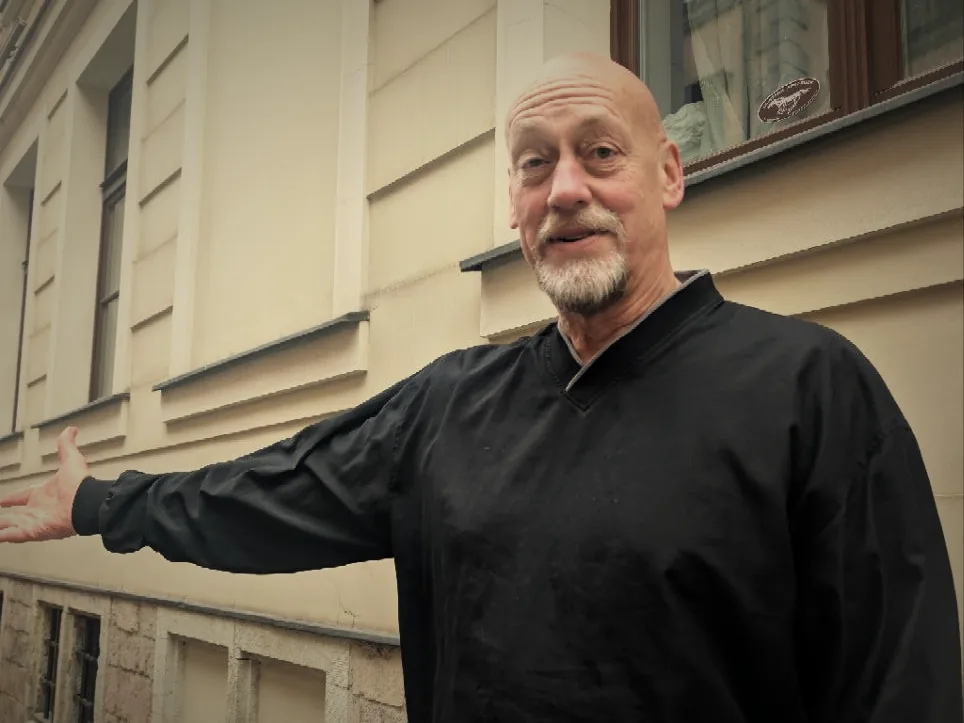
Talk to Thomas about Trust in Leadership
Tell him about the team and what it's stuck on. He'll tell you whether these are the right four hours.